Somewhere along the way, rest became the hardest thing to buy. We have arranged our lives so that idleness feels like failure and stillness like a problem to be solved; even our holidays have become itineraries to be completed. Into this peculiar modern condition has stepped the wellness retreat — and, after a long adolescence of green juices and Instagrammable yoga decks, it has grown into something genuinely serious: an industry devoted, at its best, to the radical and surprisingly difficult act of helping people do nothing at all.
It is easy to be cynical about wellness travel, and much of it deserves the cynicism. For every retreat doing rigorous, evidence-based work there is another selling vague "energy" and expensive water in a beautiful setting. But to dismiss the whole category is to miss a real and interesting shift: that some of the most sophisticated hospitality on earth is now being built not around indulgence but around restoration, and that for a great many over-worked, over-stimulated travellers, a serious retreat has become the most valuable trip they take all year. The trick is telling the substance from the spa-scented theatre.
The shiftFrom pampering to programme
The first wave of wellness travel was essentially a nice hotel with a good spa attached — a massage here, a facial there, a salad menu, all of it optional and none of it joined up. The serious modern retreat is a different animal. It begins with assessment, often genuinely medical, and builds a structured programme around your particular goals: sleep, stress, fitness, recovery, a specific health concern. The treatments, the food, the movement, the schedule — and the things deliberately removed, like alcohol and, increasingly, the phone — are coordinated toward an outcome rather than offered as a buffet of pleasant options.
This is the line that separates the substantive from the superficial. A spa hotel offers treatments; a true retreat offers a transformation, however modest and temporary, pursued with intent. The best now employ doctors, physiologists, nutritionists and sleep specialists alongside the masseurs and yoga teachers, and measure where they can. You leave not merely relaxed for an afternoon but reset in a way that, if you are lucky and pay attention, lasts a while after you return. That is a far more ambitious promise than a hot-stone massage, and the retreats that deliver on it have become some of the most sought-after stays in the world.
A spa hotel offers treatments. A true retreat offers a transformation, pursued with intent.
The stylesFour kinds of retreat
"Wellness" is a vast and slippery word, and the retreats beneath it pursue very different things. Knowing which you actually want is the difference between a transformative week and an expensive, faintly disappointing one.
The medical retreat
At the rigorous end sit the clinic-retreats: serious, doctor-led programmes addressing sleep, longevity, metabolic health or recovery, with diagnostics and a clinical team. These are for people with a specific goal and a willingness to be told uncomfortable things about their habits. They are the least relaxing and often the most valuable.
The movement and fitness retreat
Others organise around the body in motion — hiking, yoga, strength, the outdoors — pairing real physical challenge with recovery and good food. The reward here is the particular clarity that comes from a tired body and a quiet mind; the risk is choosing one more demanding than the rest you actually need.
The contemplative retreat
A third kind pursues stillness directly: meditation, silence, breathwork, the deliberate removal of stimulation. The most serious enforce a digital detox and even silence among guests. For the chronically over-stimulated this can be the most profound option of all — and the most confronting, because it leaves you alone with the very noise you came to escape.
The restorative escape
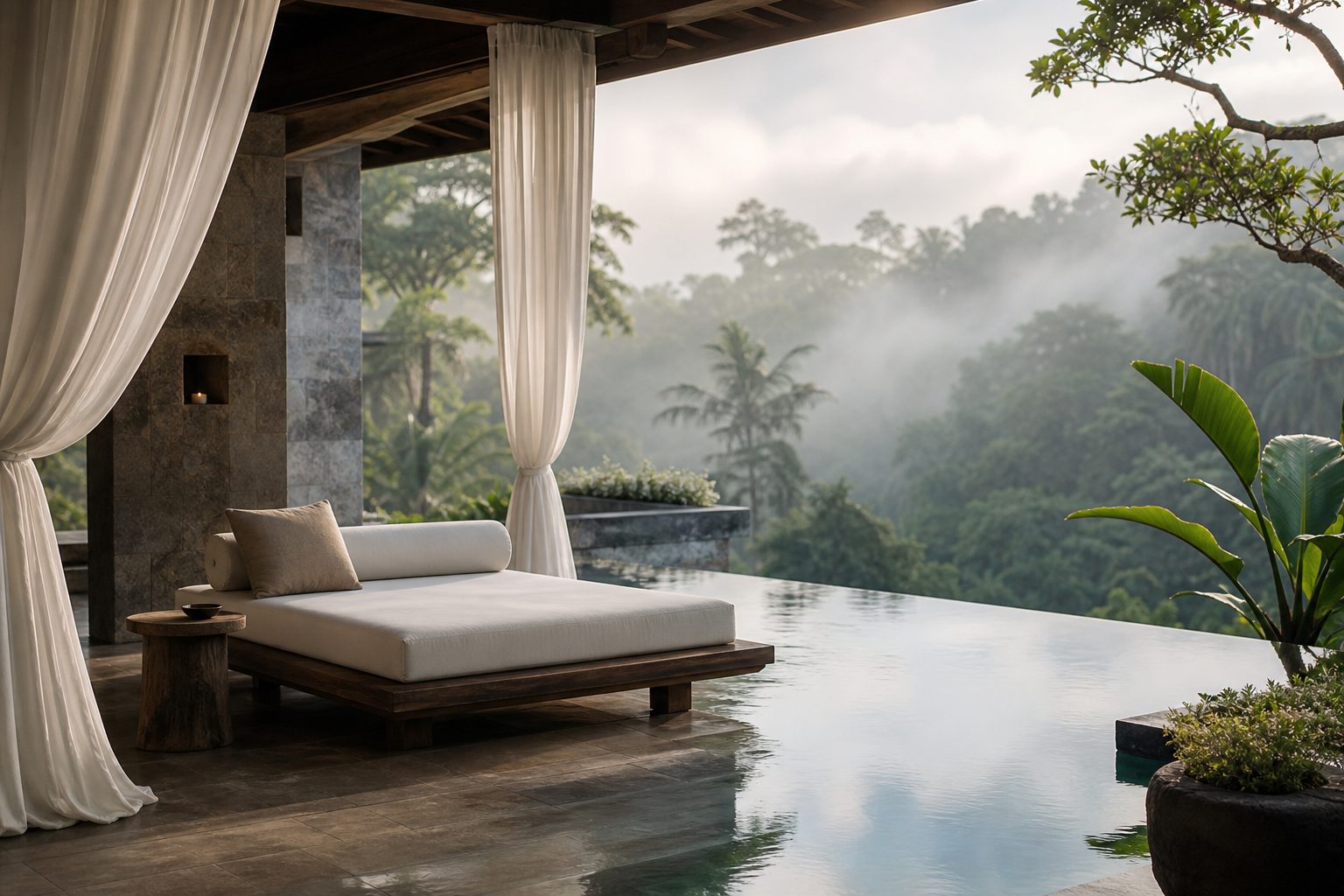
And then there is the gentlest category, and for many the right one: the simply restorative — beautiful, calm, lightly-programmed places whose ambition is not to fix or challenge you but to let you stop. No diagnostics, no targets; just exceptional rest in an exceptional setting. There is no shame in this being all you need. Often it is exactly enough.
Choosing a retreat that delivers
- Define your goal first. Recovery, sleep, fitness, stillness or simply rest — these point to completely different places. Booking the wrong kind is the commonest regret.
- Look for substance behind the imagery. Who is on the team — doctors, physiologists, real practitioners — and is there assessment and follow-through, or only treatments on a menu?
- Read the daily schedule honestly. Some retreats are dawn-to-dusk programmes; others are gloriously empty. Make sure the intensity matches the rest you actually need.
- Mind the rules. Digital detoxes, alcohol bans and silence are features, not bugs — but only if you want them. Know what's enforced before you arrive.
- Plan the re-entry. The benefit fades fast if you return straight to chaos. The best retreats send you home with simple, durable habits, not just a glow.
The caseWhy rest is the real luxury
Step back from the diagnostics and the programmes and a larger truth comes into view, one that explains why wellness travel has grown so quickly among precisely the people who can afford any kind of holiday at all. For the genuinely time-poor and over-stimulated — the people for whom a beach holiday becomes a series of emails answered under an umbrella — the scarcest commodity is not luxury in the conventional sense. It is permission to stop. And a good retreat sells exactly that: a structure, a setting and a set of rules that make rest not only possible but unavoidable.
There is something almost subversive in this. We have built a culture in which doing nothing must be justified, in which even leisure is optimised and performed. The retreat, at its best, is a small rebellion against that — a place that treats stillness as an achievement, idleness as therapy, and a long uninterrupted sleep as a luxury worth crossing the world for. In an age of infinite stimulation, the ability to switch off has become genuinely rare and genuinely valuable, and the retreats have understood, before the rest of the industry, that this is what their guests are really buying.
The scarcest luxury is no longer more. It is permission to stop.
The verdictThe most radical luxury
We are clear-eyed about the excesses of wellness travel — the pseudo-science, the wildly variable quality, the way the language of healing can be used to sell almost anything at almost any price. The traveller's defence is discernment: to look past the billowing linen and the dawn yoga photograph and ask the plain questions about who is on the team, what the programme actually does, and whether the place is serious or merely scented. Apply that scrutiny and the field separates quickly into the substantive and the theatrical.
But for those who choose well, a serious retreat offers something that no amount of conventional luxury can: not a more impressive way to be busy, but a genuine way to stop being busy at all. To come home from one truly rested — sleeping properly, moving easily, the static of the mind quieted for a while — is to be reminded that the most radical luxury available to the modern traveller is not the suite or the supercar or the famous view. It is rest, taken seriously, in a beautiful place that asks nothing of you. That the world now offers places devoted entirely to providing it is, we think, one of the more civilised developments in the whole of travel.